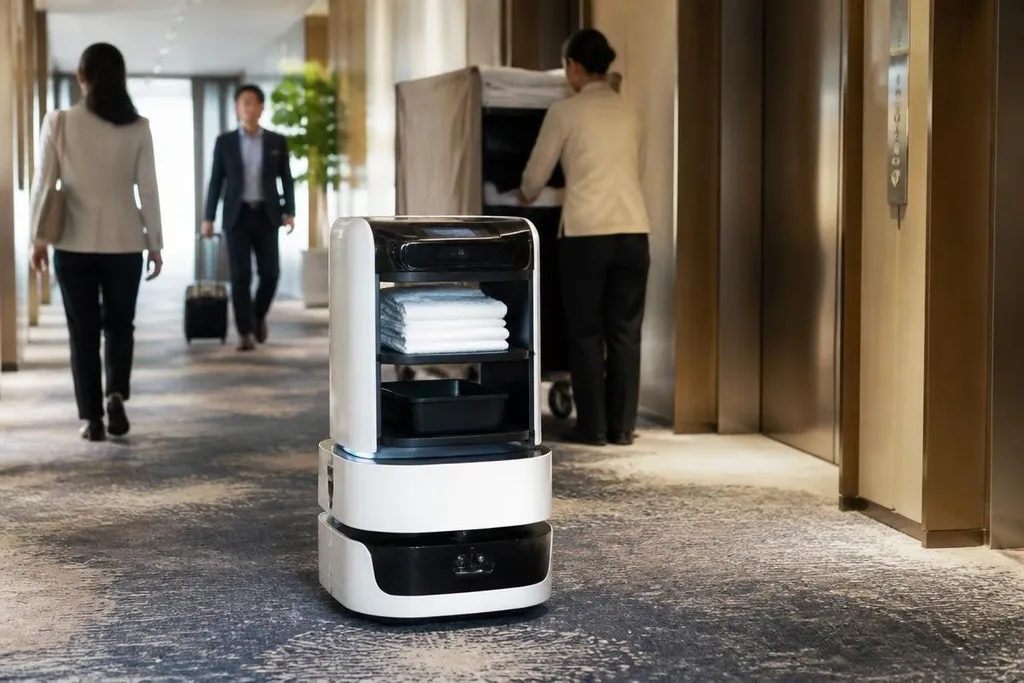
A hotel robot has to work around guests, staff, lifts, doors, carts, and changing floor plans. Without named machines, test results, prices, or hotel deployments, claims about a global race are not enough to guide a purchase.
- The task matters more than the robot’s shape
- A working lift route is worth more than a polished demo
- Labour savings need numbers behind them
Start with the hotel task
The hotel manager should begin with one job. That could be carrying room-service trays, moving laundry, taking supplies between floors, or guiding guests to a room. Each task needs different hardware and software.
For delivery work, the robot may need a storage compartment, obstacle sensors, lift controls, and a way to call staff when a door stays closed. A room-cleaning robot needs a different layout, different tools, and a safe way to work around beds, bags, and people.
The robot’s body tells you little on its own. A small wheeled system may suit flat corridors, while stairs, thick carpet, or narrow service areas may rule it out. The hotel’s floor plan matters as much as the robot’s motor rating.
The route is the product
Hotel work happens across shared spaces. The route can begin in a kitchen or storeroom and end at the right room, with the robot waiting for a lift, reading changing obstacles, and finishing the handoff without blocking guests. That route is where a hotel manager should ask for proof.
Request an uncut run through the real path. The test should include a closed door, a busy corridor, a lift call, and a failed delivery attempt. Ask what happens next, who receives the alert, and how staff restart the job.
A short video can show a robot moving well for a few metres. It cannot show how the system behaves after a guest stops in front of it or a lift arrives full. Those details decide staffing needs.
Hotel managers need more than a smooth lobby demo. They need the robot's task, site, date, and point where staff took over. Reports from Robot24.com can put those details beside hotel robot claims before you count the work a deployment would replace.
Count the work before counting savings
A robot may reduce trips for staff, but that does not prove a lower hotel cost. Someone still has to load the compartment, enter the room number, handle exceptions, clean the robot, and recover a stalled route.
The useful figure is the completed task rate. A vendor should state how many jobs the robot finishes per shift, how often staff step in, and how long each intervention takes. Battery charging, software fees, service visits, and lift integration belong in the same calculation.
The purchase price also needs context. If the price is not public, record that gap instead of guessing. Without that figure, a hotel manager cannot compare a robot with staff time, carts, or a simple delivery setup until the full cost appears.
The same rule applies to safety. Ask how the robot stops, how it detects people, and what happens after a sensor fault. Ask for the operating limits in writing.
What the race still has to prove
The phrase “global race” suggests a contest with a clear score. Hotel robotics has no useful score until makers report the same measures across the same tasks.
A fair comparison would use shared measures for route completion, staff interventions, delivery errors, charging time, and service cost. Hotels could then compare systems without relying on polished claims or body design.
The missing evidence matters most for buyers with several properties. A system that works in one building may need new maps, lift links, safety checks, and staff training in the next one. That work can decide the cost of a rollout.
A buying checklist
Use these questions before asking for a pilot:
- Name the task and the rooms it covers.
- Ask for a full route test inside your hotel.
- Record staff interventions during each shift.
- Get the robot price, service fee, and software fee in writing.
- Check lift access, door access, charging, and emergency stop rules.
- Set a pass rate before the pilot begins.
I'd wait for those numbers before calling any hotel robot a winner. The next useful step is a shared hotel test that reports completed jobs and staff interventions from the same route.